Discover Your Next Fly Camping Safari!
Book your adventure with confidence and explore with peace of mind.
Fly Camping Safari in Tanzania: An Overnight Wilderness Experience
Step beyond the traditional game drive and discover a more intimate side of the African wilderness. Learn about fly camping, guided walking experiences, temporary bush camps and what to expect from an overnight adventure in Tanzania.
ENQUIRE ABOUT FLY CAMPING EXPLORE MOBILE CAMPINGImagine walking through the African bush as the afternoon light settles over the landscape, discovering animal tracks, listening to birds and learning about the smaller details of the ecosystem. As evening approaches, you arrive at a simple temporary camp where you spend the night surrounded by nature.
This is the idea behind fly camping: a lightweight, intimate overnight wilderness experience that takes you beyond conventional safari accommodation.
Unlike a traditional game-drive safari, fly camping places greater emphasis on walking, observation and experiencing the natural environment at ground level. It can be an exciting option for adventurous travellers who want a deeper connection with Tanzania’s landscapes.
At Bush and Forest Explorers, we introduce travellers to different ways of discovering Tanzania, including wildlife safaris, mobile camping and nature-based experiences. Fly-camping arrangements require specific planning, permissions and suitable local operators, so availability and locations must be confirmed before booking.
What Is Fly Camping?
Fly camping is a form of lightweight wilderness camping in which travellers spend a night away from a permanent lodge or main safari camp.
In a typical walking-based fly-camping experience, guests walk through a permitted wilderness area with professional guides and the required ranger support. A small temporary camp is arranged at an approved location for the overnight stay.
The experience is deliberately simpler and more intimate than a conventional safari lodge. The emphasis is on the landscape, wildlife, walking and the atmosphere of spending a night in nature.
How Does a Fly Camping Safari Work?
The exact arrangements depend on the protected area, operator, walking route, permits and available facilities. A typical walking-based experience may follow a sequence like this:
1. Preparation and briefing
Before setting out, your guide explains the walking route, expected conditions, safety instructions, what to carry and how to behave around wildlife.
2. Guided bush walk
You explore the natural environment on foot, learning about animal tracks, plants, birds, insects and signs of wildlife activity.
3. Arrival at the temporary camp
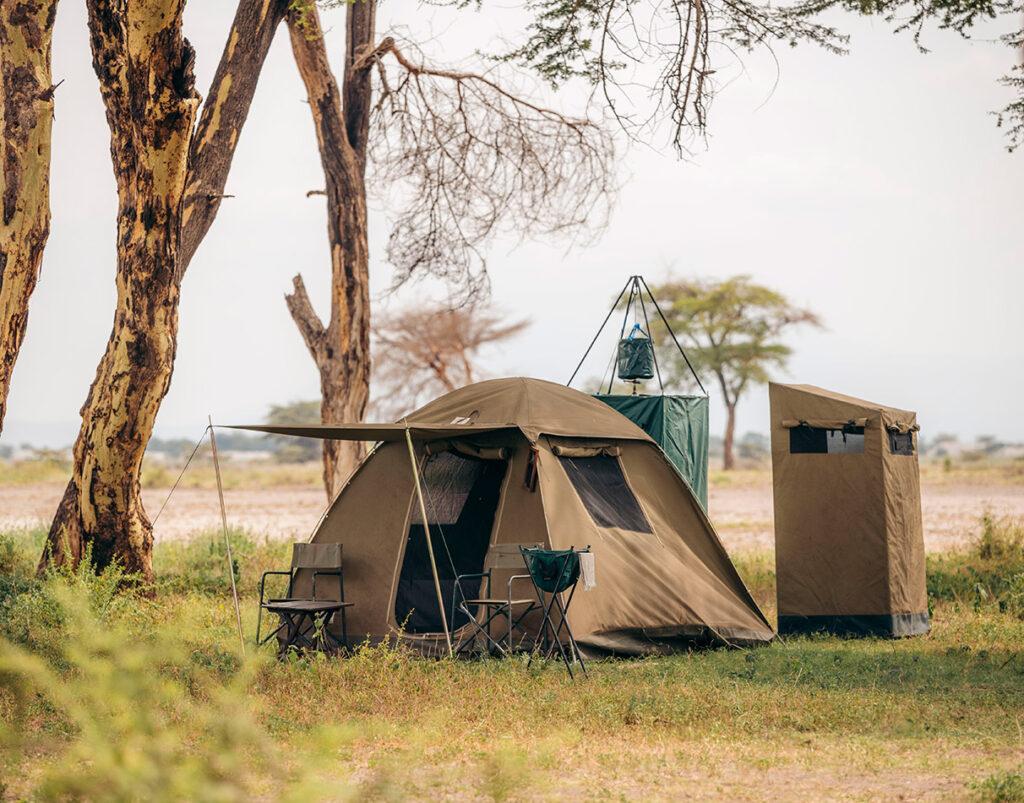
The overnight camp is arranged at an authorised location. The setup may be simple and lightweight, with only the essentials required for the night.
4. An evening in the wilderness
Depending on the camp arrangement, guests may enjoy a simple meal, relax beneath the night sky and experience the natural sounds of the surrounding landscape.
5. Morning in the bush
Wake up to the changing sounds and light of the wilderness. Some experiences include a morning walk before returning to the main camp or meeting the onward safari arrangements.
Not every fly-camping experience follows the same format. The route, equipment, meals, sleeping arrangements and support team must be confirmed for the specific experience.
Discover Tanzania on Foot
Walking is what makes a walking-based fly-camping experience different from an ordinary vehicle safari.
From the vehicle, it is easy to focus on large animals. On foot, you begin to notice the details that make the ecosystem work: tracks in the soil, animal droppings, insects, plants, bird calls and changes in the landscape.
What might you discover?
- Animal footprints and signs of recent wildlife activity.
- Birdlife and smaller creatures often overlooked during game drives.
- Native trees, grasses and medicinal plant knowledge.
- How animals use the landscape and water sources.
- The relationship between wildlife, vegetation and the environment.
Walking safaris are not designed to approach dangerous animals closely. Guides and rangers manage the route and maintain safe distances.
What Is a Temporary Fly Camp Like?
A fly camp is intentionally lightweight. It is designed to provide the essentials for an overnight stay while keeping the experience connected to the surrounding environment.
Sleeping arrangements
Depending on the operation, accommodation may involve a lightweight tent, bedroll, sleeping mat or other basic sleeping equipment. The exact arrangement should be confirmed before booking.
Dining and meals
Meals may be simple and prepared by the support team or organised as part of the walking safari. Ask what food, drinking water and dietary arrangements are provided.
Washing facilities
Fly camping is not the same as a lodge stay. Washing facilities may be basic, and some temporary camps may not have conventional showers or permanent bathrooms.
Lighting and equipment
Lighting is usually limited. A headlamp or torch is useful, and guests should not assume that electricity, charging points or mobile connectivity will be available.
Where Can You Experience Fly Camping in Tanzania?
Tanzania has a variety of national parks, conservation areas and wilderness landscapes where guided walking experiences may be available. However, fly camping is not automatically permitted everywhere. Each location has its own regulations, approved routes and operating arrangements.
Serengeti National Park
The Serengeti is famous for its expansive plains, diverse wildlife and Great Wildebeest Migration. Selected permitted areas offer walking experiences, but access to specific routes and overnight arrangements must be confirmed with the relevant authorities and authorised operators.
Explore Serengeti National Park →Tarangire National Park
Tarangire is known for its baobab trees, elephant populations and seasonal wildlife concentrations. Guided walking activities may be available in approved areas, subject to park arrangements.
Explore Tarangire National Park →Nyerere National Park
Nyerere offers vast wilderness landscapes, river systems and diverse wildlife habitats. It is among the destinations associated with more extended walking and wilderness experiences. Specific routes and overnight arrangements require advance planning.
Explore Nyerere National Park information →Other wilderness and conservation areas
Other protected areas and community-managed landscapes may offer guided walking experiences. The relevant land authority determines where visitors can walk, camp and stay overnight.
Availability should be checked for the exact location and travel dates rather than assumed from a general destination description.
Fly Camping vs Fly-In Safari: What Is the Difference?
These two expressions can sound similar, but they describe different safari experiences.
Fly Camping
A lightweight overnight wilderness camp, often reached as part of a guided walking safari. The experience focuses on walking, nature observation and sleeping in a temporary camp.
- Walking-based exploration.
- Simple temporary accommodation.
- Close connection with nature.
- Specific permits and ranger arrangements may apply.
Best suited to: Adventurous travellers interested in walking and a simple overnight wilderness experience.
Fly-In Safari
A safari that uses a scheduled or charter aircraft to reach a remote park or airstrip. Guests usually transfer from the airstrip to a lodge or tented camp.
- Air travel between destinations.
- Less time spent on long road transfers.
- Access to remote safari areas.
- Accommodation is usually a lodge or tented camp.
Best suited to: Travellers seeking convenient access to remote safari destinations and shorter transfer times.
Fly Camping vs Traditional Mobile Camping
Fly camping and mobile camping both provide opportunities to experience the outdoors, but they are different in their setup and level of support.
Fly Camping
A lightweight temporary camp associated with a walking experience. The overnight setup is usually simple and designed for a short stay away from the main camp.
Mobile Camping
A safari accommodation arrangement in which tents and camp facilities are organised along a safari route. It may include a more developed camp setup, dining arrangements and support services.
Explore Mobile Camping Tanzania Safaris →Who Is Fly Camping Suitable For?
Fly camping is generally best suited to travellers who enjoy outdoor activities and are comfortable with simple accommodation and limited facilities.
Nature lovers
Travellers who want to learn more about animal tracks, plants, birds and the natural environment may find walking-based experiences especially rewarding.
Adventure travellers
If you enjoy walking, exploring remote landscapes and spending time outdoors, a temporary overnight camp may be an appealing addition to your safari.
Wildlife photographers and naturalists
Walking can provide a different perspective on wildlife and the ecosystem. It is particularly interesting for travellers who enjoy observing smaller details rather than focusing only on large mammals.
Travellers comfortable with simple facilities
Fly camping is not usually a luxury accommodation experience. Guests should be comfortable with basic sleeping arrangements and limited facilities.
What to Pack for a Fly Camping Safari
Because fly camping is lightweight, it is important to carry only the essentials needed for the walk and overnight stay.
Clothing
- Comfortable walking trousers.
- Long-sleeved lightweight shirt.
- Warm layer for the evening.
- Comfortable closed walking shoes.
- Hat and sunglasses.
- Light rain jacket where appropriate.
Personal essentials
- Insect repellent.
- Sunscreen.
- Personal medication.
- Reusable water bottle.
- Small personal toiletries.
- Headlamp or torch.
Photography
- Camera or smartphone.
- Spare batteries.
- Small protective camera bag.
Ask your operator which sleeping equipment, food, water and luggage arrangements are provided. You should not assume that all camping equipment is included.
Safety and Regulations for Walking and Fly Camping
Walking in wildlife areas is very different from walking in an ordinary nature reserve. Large wild animals can be unpredictable, and activities must follow the rules of the relevant protected area.
Use authorised walking routes
In national parks, walking activities must follow the park’s approved routes and regulations. Visitors should never leave the designated route or organise an independent walk in a wildlife area.
Follow ranger and guide instructions
TANAPA’s published safety guidance states that walking safaris in national parks take place on designated trails accompanied by an armed ranger. The professional guide and ranger manage the walk and provide instructions throughout the experience.
Understand the physical demands
Walking distances and duration vary according to the route, terrain and conditions. Be honest about your fitness, walking experience and any health considerations when discussing the trip.
Respect wildlife
- Never approach or attempt to feed wild animals.
- Remain with your guide and ranger.
- Keep noise low and follow instructions.
- Do not wander around a temporary camp without permission.
- Follow all fire, waste and campsite rules.
Read the official TANAPA Walking Safaris information and TANAPA visitor planning guidance.
How Long Does a Fly Camping Experience Take?
The duration depends on the walking route, park regulations, camp arrangements and the itinerary offered by the authorised operator.
One-Night Experience
A single overnight stay may be arranged as an addition to a wider safari, where an approved route and camp arrangement are available.
Multi-Day Walking Journey
Some wilderness experiences involve longer walks and more than one overnight camp. These require more detailed logistics, route planning and advance arrangements.
Do not choose the duration based only on the number of nights. Ask about walking hours, terrain, luggage, support arrangements and the return route.
How to Plan a Fly Camping Safari in Tanzania
Fly camping involves more preparation than a standard game-drive safari. The right arrangements depend on the protected area, permissions, walking route and available support team.
1. Choose your preferred destination
Tell us which part of Tanzania you are interested in exploring. The selected destination will influence which walking and overnight options can be considered.
2. Share your travel dates
Availability may depend on seasonal conditions, park operations, permits and the schedule of the authorised team.
3. Explain your walking experience
Share your fitness level, preferred walking duration and any relevant limitations so the operator can assess whether the activity is suitable.
4. Confirm the overnight arrangements
Ask about sleeping equipment, meals, water, sanitation, luggage support, guide and ranger arrangements, and the camp’s approved location.
5. Review the full itinerary and quotation
Confirm the activity permits, park fees, accommodation, transport and all included services before making a booking.
For a broader safari experience, explore our Tanzania Safari Packages and Private Safari Options.
Combine Fly Camping with a Tanzania Safari
A walking and fly-camping experience can be considered as part of a wider Tanzania journey, subject to availability and the relevant permissions. You may also combine your safari with other wildlife and nature experiences.
Serengeti Wildlife Safari
Explore the iconic Serengeti plains and discover the Great Wildebeest Migration.
Discover Serengeti Migration Safaris →Tarangire Safari
Discover elephant herds, baobab landscapes and seasonal wildlife activity.
Explore Tarangire →Ngorongoro Crater
Experience the dramatic scenery and wildlife of this remarkable conservation area.
Explore Ngorongoro →Mobile Camping Safari
Experience a different style of camping as you travel through Tanzania’s safari destinations.
Explore Mobile Camping →Interested in a Fly Camping Experience in Tanzania?
Tell us about your travel dates, preferred destination, group size and the type of wilderness experience you are looking for. We can discuss the possibilities and help establish whether a suitable guided walking and overnight arrangement is available for your itinerary.
All walking and overnight arrangements are subject to location-specific permissions, operator availability and safety requirements.
REQUEST A FREE QUOTE EMAIL OUR TEAMFrequently Asked Questions About Fly Camping in Tanzania
What is fly camping in Tanzania?
Fly camping is a lightweight overnight wilderness experience, often associated with a guided walking safari. Travellers spend a night in a temporary camp rather than returning to a permanent lodge or main camp.
Does fly camping mean flying in an aircraft?
Not necessarily. In this context, fly camping describes a temporary overnight camp associated with a walking experience. A fly-in safari is different and involves travelling by aircraft to a safari destination.
Is fly camping the same as mobile camping?
No. Fly camping is generally a lightweight overnight arrangement linked to walking in the wilderness. Mobile camping involves a larger camp setup that can be organised along a safari route.
Is fly camping safe?
Safety depends on following the relevant park rules, using authorised routes and travelling with the required professional guide and ranger support. In national parks, TANAPA’s guidance requires walking safaris to use designated trails and be accompanied by an armed ranger.
Do I need to be physically fit?
Yes, a reasonable level of fitness is important for walking-based experiences. The physical demands depend on the route, duration, terrain and conditions. Discuss your ability with the operator before booking.
Is fly camping a luxury experience?
Not usually. The traditional fly-camping concept focuses on a simple temporary camp and a closer connection with nature. It may have limited facilities compared with a luxury lodge or established tented camp.
Can I go fly camping in the Serengeti?
Walking activities are available in selected permitted areas of the Serengeti, but overnight fly-camping arrangements depend on the specific location, park permissions and authorised operator. Confirm the exact arrangements before booking.
Can children join a fly-camping safari?
Age limits depend on the park, walking route and operator. Walking activities may have minimum-age requirements. Confirm the applicable rules before making plans with children.
What should I bring on a fly-camping safari?
Useful items include comfortable walking shoes, lightweight clothing, a warm layer, insect repellent, sunscreen, a headlamp, personal medication and a reusable water bottle. Your operator should confirm which camping equipment is supplied.
How many nights can I spend fly camping?
Some arrangements may involve one night, while longer walking journeys may include multiple overnight camps. The duration depends on the approved route, permissions and operating arrangements.
How do I enquire about fly camping with Bush and Forest Explorers?
Contact our team with your travel dates, preferred destination, number of travellers and walking experience. We can discuss the possibilities and confirm whether a suitable arrangement can be made.
Travel information: Walking routes, ranger arrangements, camping permissions, age limits and available facilities vary by protected area. Confirm all details with the relevant authority and authorised operator before travel.
Official resources: TANAPA Walking Safaris, TANAPA Plan a Trip and Official Tanzania Tourism.