7-Day Rongai Route Kilimanjaro Trek
Approach the Roof of Africa from the northern slopes of Kilimanjaro. Follow a quieter trail through forest, open moorland and the dramatic landscape between Mawenzi and Kibo before your summit attempt at Uhuru Peak.
ENQUIRE ABOUT THIS TREK VIEW THE ITINERARYDiscover Kilimanjaro from its northern side
The Rongai Route is the only established Kilimanjaro ascent that approaches the mountain from the north, close to the Kenya–Tanzania border. It offers a different perspective of the mountain, beginning in the northern forest before opening into heath, moorland and high-altitude terrain.
Compared with some of the busier southern approaches, the early stages of Rongai can feel quieter and more remote. As the trail gains altitude, views open towards Kibo and Mawenzi, two of Kilimanjaro’s distinctive volcanic peaks.
The route passes through the area around Third Cave and Mawenzi Tarn before crossing the broad alpine landscape known as the Saddle towards Kibo Hut. The summit attempt begins from Kibo, and the descent follows the Marangu side of the mountain.
Rongai is often described as a gradual approach, but it remains a demanding high-altitude trek. A seven-day itinerary provides more time than a compressed six-day climb, although altitude illness remains possible and summit success is never guaranteed.
From the northern forest to the alpine Saddle
The Rongai approach begins in the lower northern slopes, where cultivated land and forest gradually give way to heath and moorland. The trail then moves towards the rugged Mawenzi area, where the scenery becomes more open and dramatic.
One of the route’s distinctive sections is the Saddle, a high-altitude landscape between Mawenzi and Kibo. From Kibo Hut, trekkers prepare for the final night ascent towards Gilman’s Point and Uhuru Peak.
The route descends through the Marangu side, giving trekkers a view of a different part of the mountain on the return journey.
7-Day Rongai Route itinerary
This is a proposed seven-day, six-night itinerary. Camp allocation, walking schedule and route conditions should be confirmed before booking. Weather, individual acclimatisation and park instructions may affect the daily plan.
Begin the northern ascent
After the transfer to the Rongai Gate area, complete park registration and meet the mountain crew. Begin walking through cultivated land and forest on the northern slopes. The trail gradually enters a more open landscape as you gain altitude towards Simba Camp.
Continue through the heath zone
Continue with a steady climb through open heath and moorland. Views of Kibo and the surrounding northern landscape become more visible as the trail progresses. Arrive at Second Cave and settle into camp for the night.
Move deeper into the high mountain
Leave the main northern trail and continue towards the area below Mawenzi. The route crosses open mountain terrain with views of the rugged volcanic peaks. Reach Third Cave Camp, where you spend the night and continue adjusting to the increasing altitude.
Reach the dramatic Mawenzi landscape
Continue towards Mawenzi Tarn, situated beneath the rugged spires of Mawenzi. The trail becomes more exposed and rocky as you move into the high-altitude environment. On arrival, take time to rest, hydrate and enjoy the mountain scenery.
Cross the Saddle towards Kibo
Cross the broad alpine desert known as the Saddle, which lies between Mawenzi and Kibo. The terrain is open and exposed, with fewer natural landmarks along the way. Arrive at Kibo Hut, where you rest, prepare your summit equipment and receive the mountain team’s briefing for the night ascent.
Summit attempt and descent
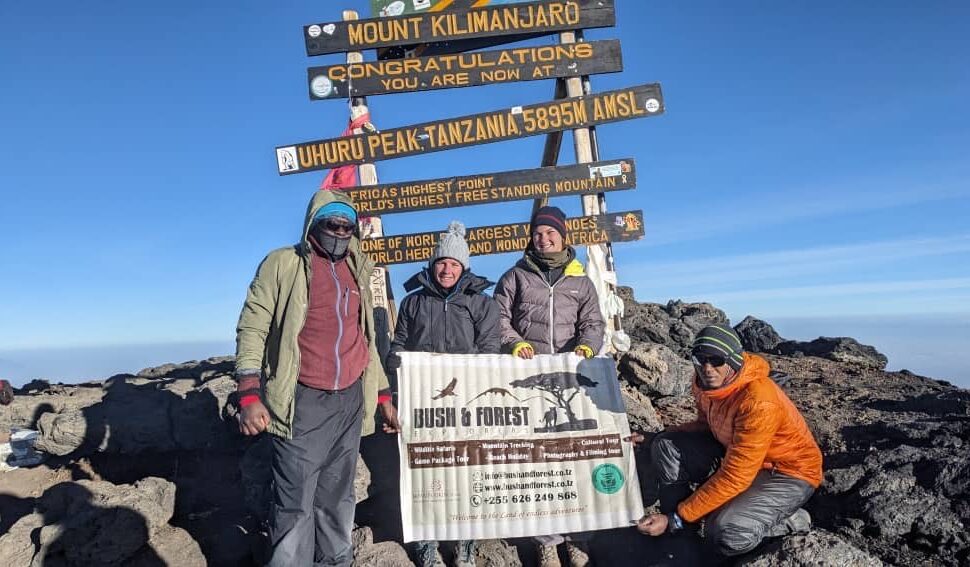
Begin the summit attempt during the night, ascending slowly towards Gilman’s Point on the crater rim. If your health, the weather and mountain conditions allow, continue along the rim towards Uhuru Peak at 5,895 metres.
After time at the summit, descend carefully towards Kibo Hut and continue down to Horombo Hut. This is an exceptionally long and physically demanding day. Your mountain guide may adjust the plan or recommend turning back when necessary for safety.
Complete your Kilimanjaro journey
After breakfast, continue descending through the mountain’s vegetation zones towards Marangu Gate. Complete the park exit procedures before transferring to your hotel in Moshi or Arusha, according to your arrangements.
How difficult is the Rongai Route?
Rongai has a relatively steady approach during its early stages, but it should not be considered an easy walk. The trek involves several days of walking at altitude, cold nights, exposed terrain and a demanding summit attempt.
Who may enjoy this route?
- Trekkers who prefer a northern approach to Kilimanjaro
- People interested in a quieter start to their mountain journey
- Hikers with good physical fitness and preparation
- Travellers comfortable with camping or mountain hut conditions as arranged
- People prepared for several consecutive days of trekking
What should you be prepared for?
- High altitude and changing weather
- Cold temperatures, particularly around summit night
- Long walking days and uneven terrain
- Limited facilities at some mountain camps
- Possible changes to the itinerary for safety
- No guarantee of reaching the summit
Respect the people who make your climb possible
Every Kilimanjaro expedition depends on a mountain crew. Guides, assistant guides, cooks and porters work together to support trekkers throughout the journey. Responsible trekking means recognising their contribution and asking how they are treated, paid, equipped and supported.
Questions to ask your operator
- Are mountain crew paid fairly and on time?
- Are porter loads weighed and kept within applicable guidelines?
- Are porters provided with appropriate clothing and footwear?
- Do crew members receive adequate food and suitable sleeping arrangements?
- Is there a transparent tipping process?
- Are sick or injured crew members supported and evacuated when necessary?
Support responsible trekking
Before booking, ask whether your chosen operator participates in an independently monitored responsible trekking programme. You can also read the porter treatment guidelines and learn how tipping can be distributed transparently.
Do not assume that every operator is a member of a porter-support organisation. Verify participation directly with the relevant organisation.
Kilimanjaro Porters Assistance Project (KPAP)
KPAP, implemented locally through the Kilimanjaro Responsible Trekking Organization, works to promote fair treatment of Kilimanjaro porters and monitor participating companies’ porter-welfare practices.
Visit KPAP / KRTO →Porter treatment and tipping guidelines
Read guidance on fair pay, appropriate loads, food, shelter, equipment and transparent tipping procedures. Ask your operator to explain its own arrangements before the climb.
Read porter welfare guidelines →Tanzania Association of Porters
A porter-focused organisation with programmes relating to welfare, training, advocacy, equipment, medical support and emergency assistance for porters.
Explore porter support programmes →Kiliporters
A porter-led organisation advocating for the rights, dignity, health, safety and economic opportunities of porters working on Kilimanjaro and Mount Meru.
Learn about Kiliporters →Kilimanjaro rescue and travel health insurance
Mount Kilimanjaro is a high-altitude environment. Good preparation, experienced mountain guidance and a clear emergency plan are essential. Before travelling, understand what happens if you become ill or injured and how medical costs and evacuation will be handled.
Mountain rescue and evacuation
Rescue arrangements are coordinated through the relevant Kilimanjaro National Park authorities and mountain procedures. Depending on a person’s condition and location, evacuation may involve an assisted descent on foot, a stretcher or a park-authorised vehicle from an accessible point.
Do not assume a helicopter will be available. Air evacuation depends on operational availability, weather, visibility, landing conditions, location and medical assessment. Your guide should explain the emergency communication and evacuation arrangements before the climb.
Read the official Kilimanjaro National Park Visitor Guide and keep the park headquarters contact details available.
Travel and medical insurance
Arrange comprehensive travel insurance before your climb. Check the policy wording carefully and confirm that it explicitly covers:
- High-altitude trekking up to at least 6,000 metres
- Emergency medical treatment and hospital costs
- Emergency evacuation from the mountain
- Medical repatriation to your home country, where applicable
- Trip cancellation, interruption and baggage protection, if required
Some policies exclude high-altitude trekking or impose altitude limits. Ask your insurer to confirm the cover in writing before departure.
AMREF Flying Doctors
AMREF Flying Doctors provides air ambulance and emergency medical services in the region. Contact them directly to understand available services, membership options, geographical limits and exclusions.
Visit AMREF Flying Doctors →Flying Doctors Society Africa
Offers medical evacuation membership options covering different East African territories. Check the plan’s exact terms, geographical coverage, emergency conditions and exclusions before relying on it.
Review membership plans →Official Kilimanjaro National Park information
Check official visitor information, park regulations, access points and safety guidance before your climb.
Read the TANAPA visitor guide →International guidance on altitude medicine
Learn about altitude-related illness, symptoms and the importance of prompt descent and appropriate medical response.
Read UIAA mountain medicine guidance →How to prepare for the Rongai Route
Start preparing well before your arrival in Tanzania. A successful and enjoyable mountain experience depends on fitness, suitable equipment, realistic expectations and the ability to listen to your body.
Physical preparation
- Build a regular walking and hiking routine.
- Practise longer walks on consecutive days.
- Include uphill and downhill training.
- Improve cardiovascular endurance and leg strength.
- Practise walking with a daypack and trekking poles.
Essential mountain equipment
- Broken-in waterproof hiking boots
- Warm insulated jacket and thermal layers
- Waterproof jacket and trousers
- Warm gloves, hat and neck protection
- Headlamp with spare batteries
- Water bottles, sun protection and personal medication
Ask for a detailed packing list and confirm which equipment is supplied, rented or carried by the mountain crew. General Tanzania travel advice is available in our Tanzania packing guide, but a dedicated Kilimanjaro equipment list should be used for your climb.
Compare Kilimanjaro trekking routes
Each Kilimanjaro route has its own scenery, duration, accommodation arrangements and acclimatisation profile. Compare the alternatives before deciding which approach is suitable for you.
Machame Route
A scenic southern approach with varied mountain landscapes and a camping-based itinerary.
Explore Machame Route →Marangu Route
The classic route with mountain hut accommodation and a different ascent and descent arrangement.
Explore Marangu Route →Umbwe Route
A steep and direct approach generally suited to experienced and well-prepared trekkers.
Explore Umbwe Route →Northern Circuit
A longer approach that travels around the northern slopes of Kilimanjaro.
Explore Northern Circuit →Uhuru Peak
Discover the summit of Kilimanjaro and the highest point on the African continent.
Discover Uhuru Peak →All Kilimanjaro Routes
Compare the different approaches and learn about the mountain’s trekking options.
Compare all routes →Frequently asked questions about the Rongai Route
How many days does the Rongai Route take?
This page presents a seven-day, six-night itinerary. Shorter variations may be offered, but a longer schedule generally allows more time on the mountain. Discuss the acclimatisation profile with your trekking provider before choosing a duration.
Where does the Rongai Route start?
The route approaches Kilimanjaro from the north and begins at the Rongai Gate area, near the village of Nale Muru. It descends on the southern side through Marangu Gate.
Is the Rongai Route the easiest Kilimanjaro route?
It is often described as having a gradual early approach, but no Kilimanjaro route should be considered easy. The summit altitude, long trekking days and risk of altitude illness make every route physically demanding.
Does the Rongai Route use mountain huts or tents?
The Rongai itinerary generally uses designated mountain camps with tent accommodation. Confirm the specific camp arrangements and equipment supplied in your booking details.
Can I see wildlife on the Rongai Route?
The lower northern slopes include forest and natural habitats where wildlife may be present. Sightings are unpredictable and should never be treated as guaranteed.
Do I need travel insurance for Kilimanjaro?
Comprehensive travel and medical insurance is strongly recommended. Make sure the policy explicitly covers high-altitude trekking to 6,000 metres, emergency medical treatment and evacuation. Check the policy exclusions and conditions before travelling.
Is helicopter rescue available on Kilimanjaro?
Do not assume helicopter evacuation will be available. Emergency evacuation arrangements depend on the climber’s condition, location, weather, aircraft availability and operational approval. Ground evacuation may be required. Ask your operator to explain the actual emergency response plan.
Can I combine the Rongai Route with a Tanzania safari?
Yes. You can plan a wildlife safari before or after your mountain trek, allowing suitable time for recovery. Explore our private safari options and Tanzania specialist experiences.
Ready to explore the Rongai Route?
Share your preferred travel dates, group size and trekking experience with Bush and Forest Explorers. We can discuss the seven-day itinerary, mountain arrangements, preparation requirements and a personalised quotation.
REQUEST A TREK QUOTEWhatsApp: +255 626 249 868 · Email: info@bushandforest.co.tz